Why Your Softener Is Not Regenerating
Hard water is back and the salt level never drops. Here is why your softener stopped regenerating in Queen Creek, AZ and what it takes to fix it.
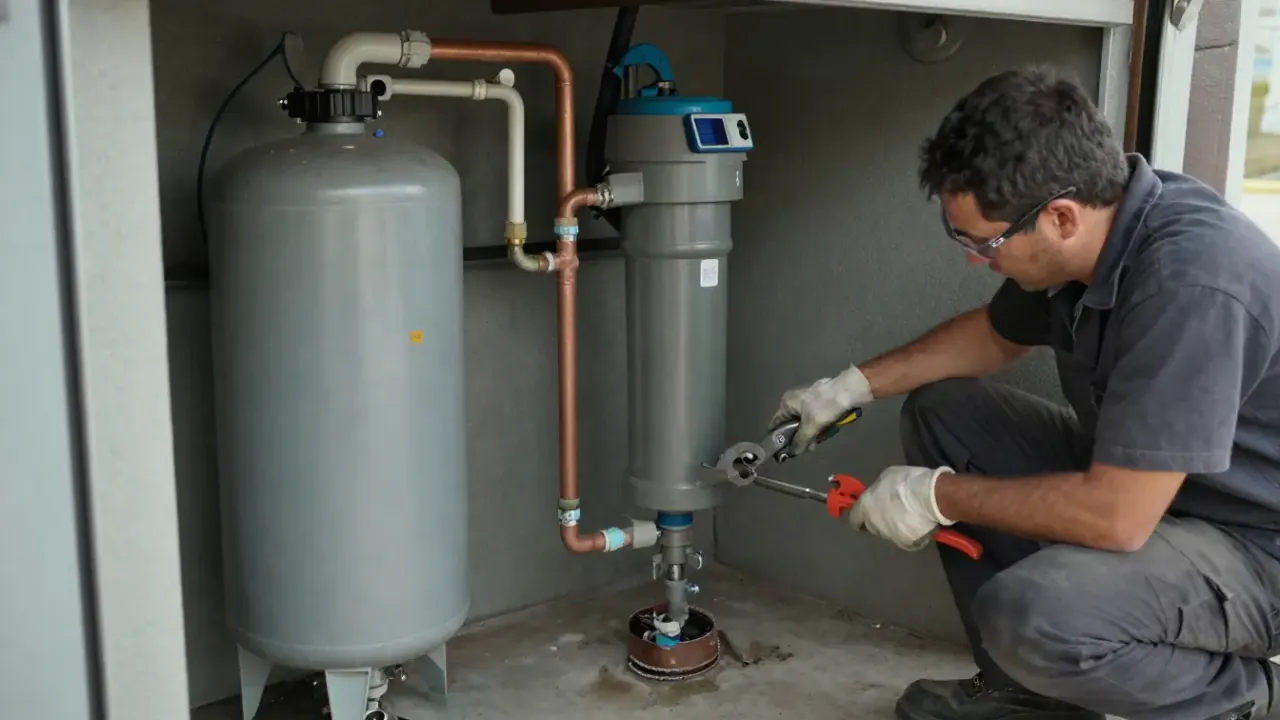
Your softener is not regenerating because the control valve is not advancing into the brine and backwash stages, the brine tank is not drawing brine, or the unit is stuck on a time or meter setting that never triggers a cycle. Those three failures cover roughly 90% of the calls we run in Queen Creek. Why your softener is not regenerating usually comes down to a mechanical or electrical fault in the valve head, not the resin itself.
We are Queen Creek Water Softener, and we have walked into hundreds of garages here where the salt sat untouched for weeks while the family showered in 17-grain water. Below we break down each failure mode, what it sounds and looks like, and what it takes to fix it.
Why Your Softener Is Not Regenerating: The Short Answer
Softener regeneration failure is a mechanical or electrical fault that stops the control valve from pulling brine through the resin bed and rinsing it out. The valve is the brain of the system. When it stops indexing, nothing downstream happens.
Most units run a regeneration cycle every 2 to 12 days, depending on hardness and household size. If yours has not cycled in two weeks, the resin is fully exhausted and you are back to raw Colorado River water coming through the tap. You can usually confirm this with a quick water hardness test Queen Creek at the kitchen sink.
Three things cause almost every failure we see: a stuck or burnt-out control head, a clogged brine line or injector, and a programming error on the timer. We will walk through each one.
How the Regeneration Cycle Actually Works
A softener regeneration cycle has four stages, and it takes 60 to 90 minutes from start to finish on most residential units. If any stage fails, the whole cycle fails.
- Backwash - water runs backward through the resin tank for 8 to 12 minutes to lift out debris and loosen the bed.
- Brine draw - the injector pulls salty water from the brine tank down through the resin, stripping calcium and magnesium off the beads. This takes 50 to 70 minutes.
- Slow rinse - the remaining brine is pushed out slowly so the resin has time to release the hardness minerals.
- Fast rinse - a final 5 to 10 minute flush clears the last of the salt before the unit returns to service.
If the valve never leaves position one, or if it hangs in brine draw, you will see a full brine tank and hard water at the same time. That combination is the classic signature of a control head problem.
The Most Common Causes of Softener Regeneration Failure
Softener regeneration problems almost always trace back to one of six parts. Here is what we check first on every service call.
1. A stuck or failed control valve
The control valve uses a motor and a set of seals to move between positions. Motors burn out. Seals dry out and tear. When that happens, the valve freezes mid-cycle and the unit stops softening.
You will hear the motor hum without the valve moving, or you will hear nothing at all when the cycle should start. This is the most common repair we do, and it is what our softener valve repair Queen Creek service is built around.
2. A clogged brine line or injector
The injector is a tiny venturi that creates suction to pull brine out of the tank. Sediment, iron, and hardened salt sludge plug it. Once it is plugged, the unit runs through the motions but never actually draws brine.
You can spot this by pulling the brine line off the valve during a draw cycle. If nothing sucks, the injector is blocked. We clean or replace it on site.
3. A brine tank that has not been cleaned in years
Salt does not just dissolve. It leaves behind a crust of insolubles, and in Queen Creek that crust builds up fast because our water carries a lot of calcium. A tank packed with salt mud cannot make brine, so the softener has nothing to regenerate with.
We pull the tank, scoop out the sludge, and sanitize it. That is the whole point of brine tank cleaning Queen Creek, and it is a job most homeowners never think about until the unit quits.
4. A timer or meter that is set wrong
If someone bumped the dial during a move or a power outage reset the board, the unit may be programmed to regenerate every 30 days instead of every 4. On metered units, a wrong hardness setting means the meter never counts down to zero.
We see this a lot in newer builds where the installer set the unit for 10 grains and the actual water is 17. The softener is working. It is just being told to wait too long.
5. A failed brine valve or float
The float assembly inside the brine tank controls how much water refills after each cycle. If the float sticks, the tank either overfills or runs dry. Both kill regeneration.
6. Low water pressure or a frozen line
Regeneration needs at least 20 PSI at the valve inlet. Below that, the injector cannot pull brine. In Queen Creek this is rare, but we do see it on shared wells and on properties with a failing pressure regulator.
Why Is My Softener Not Using Salt?
If your softener is not using salt, the unit is not completing a brine draw, or it is not regenerating at all. Salt consumption is the clearest single indicator of whether regeneration is happening.
A healthy family-sized softener in Queen Creek burns through roughly 40 to 80 pounds of salt per month. If you have added two bags in the last 60 days and the level has not moved, something is broken.
Check these in order:
- Is there water in the brine tank? If it is dry, the brine valve or float has failed.
- Is the salt bridged? Poke it with a broom handle. If it feels like concrete, break it up.
- Is the tank full of clear water with no salt dissolving? The injector is plugged.
- Is the valve even trying to cycle? Listen at 2 a.m. on the scheduled night.
If you cannot answer yes to a working cycle, the fix is at the valve, not the salt.
What Causes Softener Regeneration Failure in Queen Creek Arizona?
Queen Creek water is hard, and that hardness is exactly what wears softeners out faster here than in most of the country. Our municipal supply runs 12 to 18 grains per gallon, and wells on the east side of town push past 20.
That matters because every grain of hardness the resin removes has to be stripped off during regeneration. The harder the water, the more often the unit cycles, and the more cycles the valve motor and seals see in a year. A softener in Phoenix might run 60 cycles a year. The same unit in Queen Creek runs 90 to 120.
We also see more iron in the groundwater out toward the San Tan foothills. Iron fouls resin and accelerates injector plugging. If your water stains fixtures orange, that is iron, and it will shorten the life of any softener unless it is addressed.
Neighborhood age plays a role too. In established communities like Water Softener in Ironwood Crossing, many of the original units are now 10 to 15 years old and on their second or third control valve. In newer pockets like Water Softener in Hastings Farms, we mostly see programming errors and undersized units rather than worn-out parts.
If you are not sure what your water is doing, start with a free water hardness test Queen Creek before you spend money on parts.
Common Mistakes We See on Regeneration Calls
Most of the damage we repair on regeneration calls was caused by a homeowner trying to help. These are the ones that cost the most.
- Adding salt to a bridged tank. If the salt has crusted into a dome, pouring more on top just buries the problem. You have to break the bridge first.
- Forcing the valve manually. Turning the cam by hand can strip the motor gears or tear the seals. If the motor is dead, it needs to be replaced, not cranked.
- Ignoring a slow drip at the drain line. A constant trickle means the valve is stuck in rinse. That is water down the drain 24/7 and a dead softener.
- Replacing the whole unit when the resin is fine. A 10-year-old softener with a bad valve does not need to be scrapped. We replace the head and keep the tank.
- Setting hardness too low. Programming for 8 grains when your water is 17 means the unit under-regenerates and you get hard water within days of each cycle.
One more: do not assume a power outage reset your timer correctly. After any extended outage, verify the time of day and the regeneration schedule on the display.
When to Call a Professional
Call us when the valve does not move, when the brine tank stays full, or when you have replaced the salt twice and the water is still hard. Those are the three signals that the problem is inside the control head, and that is not a homeowner repair.
Our technicians carry control valves, injectors, brine valves, and seals on the truck. Most regeneration repairs are done in a single visit, usually in under two hours. We test hardness before and after so you know the unit is actually working when we leave.
If the unit is beyond saving, we handle softener removal Queen Creek and install a properly sized replacement the same day. If you want to skip salt entirely, we also install Salt-Free Water Conditioners Queen Creek AZ for homeowners who are tired of hauling bags.
Either way, you get a straight answer on what is wrong and what it costs before we start. No diagnostic fee on the first visit.
Frequently Asked Questions
Why is my water softener not regenerating in Queen Creek AZ?
The control valve is not advancing to the brine stage, the injector or brine line is clogged, or the timer is set to cycle too infrequently. In Queen Creek, hard water at 12 to 18 grains means the unit should cycle every 3 to 7 days. If it has been longer, the valve or programming is the culprit.
What causes softener regeneration failure in Queen Creek Arizona?
Hard water and iron are the two biggest drivers. High hardness forces more cycles per year, which wears out valve motors and seals faster. Iron in the groundwater fouls resin and plugs injectors. Most failures we see are on units that are 8 to 15 years old.
How do I fix my water softener not regenerating in Queen Creek?
Start by confirming the unit is trying to cycle. If the motor hums but nothing moves, the valve needs repair. If the brine tank is full and the water is hard, the injector is plugged. Both fixes require opening the control head, which is a job for a technician with the right parts on hand.
Why is my softener not using salt in Queen Creek?
Because it is not drawing brine. A working softener uses 40 to 80 pounds of salt per month for a typical family. If the level has not dropped in 60 days, check for a salt bridge, a dry brine tank, or a plugged injector. The salt is not the problem.
Who repairs water softener regeneration issues near me in Queen Creek?
We do. Queen Creek Water Softener services every neighborhood in town, from Ironwood Crossing to Encanterra to San Tan Valley. We stock control valves, injectors, and brine valves on every truck, so most repairs are finished in one visit.
Get Help With Water Softener in Queen Creek
If your softener has stopped regenerating, you are one call away from soft water again. We diagnose the valve, test your hardness, and fix it the same day in most cases.
Call Queen Creek Water Softener at (480) 337-3003 and we will get your unit cycling properly again.